

Preserve a World Heritage Property
The sites of the ‘Prehistoric Pile Dwellings around the Alps’ often lie in lakes or bogs and are few visible and difficult to access. They are exposed to a variety of dangers: intensive construction activity, drying out soils, wave action, but also tourism activities are severely damaging the pile dwellings e.g. through erosion and destruction. What has survived for thousands of years is in danger of being lost in just a few years. Regular monitoring and care of these sites and their exploration are therefore a top priority. The inscription as a UNESCO World Heritage Site is intended to raise awareness of the special significance of the pile dwellings and sensitise people to their need for protection. The countries involved have a joint responsibility to preserve and research this unique underwater cultural heritage and to communicate its special value.
Risks and Dangers

Effects of climate change
Severe weather events such as prolonged drought, extreme temperatures and severe storms pose a risk for sites also under water and in bogs. Sea level and groundwater fluctuations lead to changes in the moist environment of the sites or cause them to dry out completely at times. Persistently high temperatures, even in winter, encourage the spread of invasive plant and animal species, which can jeopardise the sites through overgrowth or use as spawning grounds.
Construction activities
In cities and heavily populated regions, the balancing of interests between construction measures and archaeological monument preservation is omnipresent. Close co-operation between the client and the preservation authorities is essential in order to take the various needs into account. Depending on the applicable monument protection law and the location of the site in an archaeological protection or building zone, the archaeological monument preservation authorities may impose conditions, such as a ban on the construction of basements or the use of large-scale covering of the sites. Adjustments to the construction method, such as greater distances between the concrete pillars or other building elements that penetrate deep into the ground, can be further measures.
Water management and tourist use of the lakes
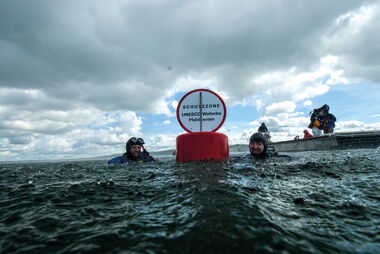
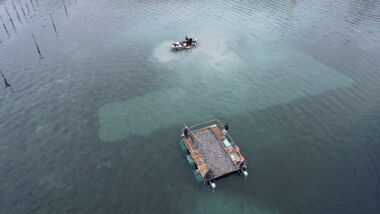
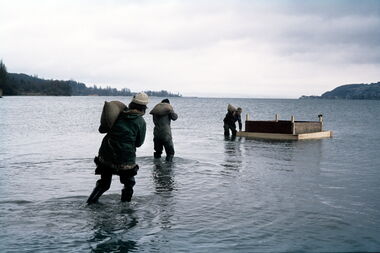
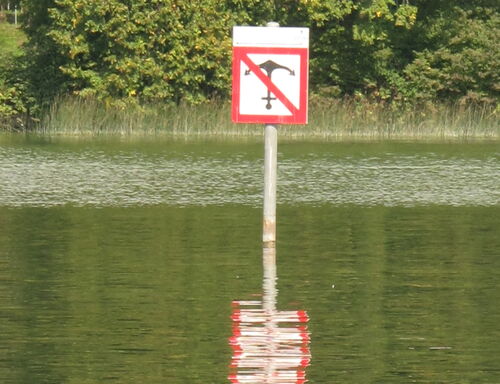
The increasing tourist use of the lakes poses a risk to the pile-dwelling sites for various reasons: they are often located on the shore or in the shallow water zone and are therefore particularly susceptible to wave movements caused by boat engines or the improper use of anchors. Especially when the water level is low due to drought, many sites are so poorly covered that leisure and sports activities on the water also pose a potential threat to the sites. Effective protective measures include covering the sites with geotextile and gravel, no-anchor zones and fences, as well as signs on or in the water informing visitors about the World Heritage Site and its need for protection.
Agricultural use of peatlands
Peatlands are often drained, for example to make them suitable for agriculture. Active measures that can counteract this situation are often implemented in close cooperation between nature conservation and archaeological monument preservation. Proven protective measures include the purchase or exchange of land and subsequent rewetting of the soil, which leads to a rise in the groundwater level, thus ensuring the necessary moist soil environment for flora and fauna as well as for the archaeological sites.
Monitoring and Protection
"Monitoring is the supervision of processes. It is an umbrella term for all types of systematic recording, measurement or observation of a procedure or process using technical aids or other observation systems. One function of monitoring is to determine whether an observed procedure or process is taking the desired course and whether certain threshold values are being adhered to in order to be able to intervene to control it if this is not the case. Monitoring is therefore a special type of logging."

By inscribing the sites on the World Heritage List, the six participating countries have committed themselves to taking joint responsibility for the sites and ensuring the best possible protection in order to preserve the World Heritage Site and its Outstanding Universal Value for future generations. The UNESCO status itself offers no additional protection for the sites. This results from the applicable legal situation in each country.
Regular monitoring is a key tool for appropriate and effective protection measures. There are a variety of measures for this, such as measuring the water level using piezometers, setting and regularly reading erosion markers, monitoring factors such as water temperature, vegetation, wave action, etc. The frequency of monitoring and the measures included are individual for each site and can vary depending on the situation and location of the individual sites.
In 2023, the Monitoring Underwater Heritage MUH working group was established within the International Coordination Group. It consists of site management representatives and external experts in underwater archaeology from each country. The aims of the working group are to exchange experiences, particularly with regard to the growing impact of climate change on the sites, and to develop recommendations for a common minimum standard for monitoring underwater pile dwelling sites. Since 2025, another working group has been dedicated to wetland sites in a similar way.
Links
AUSTRIA
RIS - Denkmalschutzgesetz - Bundesrecht konsolidiert, Fassung vom 18.03.2023
FRANCE
Code du patrimoine - Légifrance
GERMANY
Baden-Württenberg
Denkmalschutzgesetz DSchG
Bavaria
Bayerisches Denkmalschutzgesetz BayDSchG
SWITZERLAND
Federal Office of Culture
Information on legislation
Research and Methods
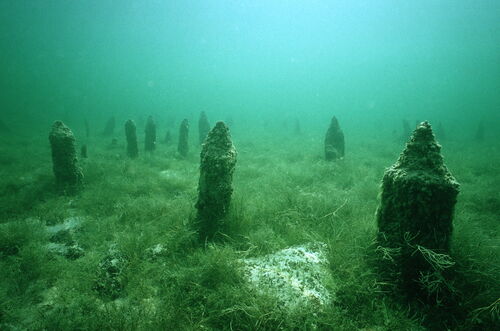
Underwater Archaeology
Underwater archaeology deals with archaeological remains from all periods of history that are located underwater. It is divided into various specialist areas such as maritime underwater archaeology, wreck research and underwater archaeology in rivers and lakes. All traces of human existence underwater that are a hundred years old or older are protected by the UNESCO Convention on the Protection of the Underwater Cultural Heritage. This convention aims to prevent the destruction or loss of historical and cultural information, as well as looting.
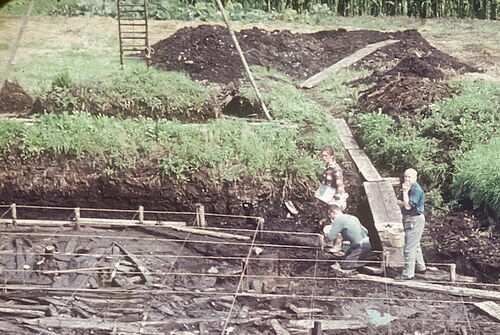
Wet Soil Archaeology
Like underwater archaeology, wet soil archaeology deals with finds and discoveries from all eras. However, in this case, the finds and discoveries are not located underwater, but in moors or other places where the permanently moist soil environment provides special conditions for the preservation of organic materials. In addition to moors, areas with waterlogged soil, former river bends, etc. can also have similar conditions. The oldest wooden wheels in Central Europe, as well as wooden floors, come from pile dwelling sites in moors, such as those found in the Federsee area (Baden-Württemberg) or the Laibach Moor (Slovenia). There are other archaeological sites in Europe with wet soil preservation, such as the Mesolithic site of Star Carr (Great Britain; link), the Early Neolithic site of La Draga (Spain, link) and the Viking trading centre of Haithabu (Germany; link), which, together with the Danevirke, has also been on the UNESCO World Heritage List since 2018.
Links
AUSTRIA
Kuratorium Pfahlbauten
FRANCE
DRASSM
GERMANY
Unesco Pfahlbauten: Arbeitsstelle Hemmenhofen
BGfU - Unterwasserarchäologie in Bayern
Arbeiten unter Wasser – Terra Mare
Uwarc - Archäologie unter Wasser
Forschungstaucher-Ausbildung – ArchaeoTask
SWITZERLAND
Unterwasserarchäologie | Stadt Zürich
Tauchequipe Archäologischer Dienst Bern
Le Centre - Centre Romand d'Études d'Archéologie Subaquatique et Sous-Marine